An outdoor kitchen quote is not one price. It is a stack of decisions taken before the number was written down, and the published band for a typical project — 15,000 and 35,000 — is wide enough that two homeowners on the same street can receive numbers that barely overlap. The reason is not labour: prices vary by 30 to 40 percent for the same layout based on appliance brands and stone selection. That variation is invisible inside a lump sum. Comparing quotes means forcing the number apart into the five parts every outdoor kitchen is actually made of: the island, the countertop, the appliances, the connections, and the permit.
The Island and the Counter Run
The island is priced per linear foot, and the published rates run from $200-350/lf for a framed island with poured concrete counter to $450-900/lf for a kitchen under a pergola or patio cover. Each rate carries its own lifespan, re-seal interval and annual maintenance figure, so the cheapest rate is not automatically the cheapest build:
| Material or system | Rate per linear foot | Lifespan | Re-seal interval | Annual maintenance |
|---|---|---|---|---|
| Masonry block island with stucco finish | $250-450/lf | 25 yrs | 3 yrs | 150 |
| Stone veneer masonry with granite counter | $400-670/lf | 30 yrs | 4 yrs | 200 |
| Modular stainless cabinets with stone top | $350-700/lf | 20 yrs | 0 | 80 |
| Framed island with poured concrete counter | $200-350/lf | 15 yrs | 2 yrs | 250 |
| Kitchen under a pergola or patio cover | $450-900/lf | 25 yrs | 3 yrs | 220 |
| Bar-height counter run only (no appliances) | $180-320/lf | 20 yrs | 2 yrs | 120 |
The Countertop and the Appliances
Countertops are usually quoted by area rather than by the run. Granite runs 40–80 per sq ft against 30–60 per sq ft for concrete, while the checklist instruction for the same decision is to choose granite or quartzite and budget 60 to 120 per square foot. Those are two different questions: the first is the stone, the second is the installed counter. Quartzite is harder and more stain-resistant than granite, and both should be sealed, but quartzite handles heat, sun, and acidic spills with fewer problems.
The appliances are the third line, and the published installed ranges are:
| Add-on | Installed range |
|---|---|
| Built-in gas grill (installed) | 1,500 – 5,000 |
| Pizza oven (installed) | 1,000 – 8,000 |
| Outdoor-rated refrigerator | 800 – 3,500 |
| Sink with plumbing | 300 – 2,000 |
| Side burner | 300 – 900 |
| Smoker or kamado station | 600 – 2,500 |
| Kegerator or beverage centre | 700 – 2,500 |
| Low-voltage lighting package | 500 – 1,500 |
| Outdoor fireplace | 2,000 – 8,000 |
The Permit and the Cover
The published permit allowance is $75 – $400, and it is an allowance rather than a price, which is exactly why it belongs on its own line. A covered structure is usually what triggers the permit: gas pressure test, electrical rough-in and a final inspection on covered structures is the sequence, with height limits of back 12 / front 10 and a setback from the property line for covers and pergolas.
Decide the cover before the layout is fixed, because it affects where the island can sit and whether the run has to move. The two local variables that decide the rest of the specification in Tampa are the weather and the ground: Tampa Bay is humid-subtropical: the National Weather Service's Tampa Bay office covers a wet season running roughly June through September that supplies most of the year's rain, alongside summer heat indices that routinely pass 100F and year-round humidity that never really dries out. Layer an airborne-chloride film over everything within a few miles of the bay and the Gulf -- which is all seven of these towns -- and the specification is set by salt and moisture more than by heat. That drives three decisions: 316 (marine) stainless for every exposed metal surface including hinges, slides and fasteners, because the 2-3% molybdenum that grade 304 lacks is what resists chloride pitting in coastal air (the Australian Stainless Steel Development Association notes grade 316 is 'often chosen for more aggressive environments such as sea-front buildings and fittings on wharves and piers'); sealed marine-grade polymer boxes or a CMU/concrete core rather than standard 'outdoor' MDF or particleboard, which delaminates and swells in coastal humidity; and countertops that tolerate thermal shock and UV without an annual reseal. Rinsing metal with fresh water after salty spells and using breathable covers rather than non-breathing tarps extends the life of all three.
Where the Matching Service Stands
Once you select your outdoor kitchens professional, they handle everything from permits to cleanup, and you receive a detailed contract with scope of work, timeline, and payment schedule. The comparison itself is yours to run, and five itemised quotes are easier to read than five totals. This is an independent matching service, not a provider; we do not employ contractors and we do not sell outdoor kitchens services.
Frequently asked questions
What should an itemised outdoor kitchen quote separate?
Five things: the island or counter run, the countertop, the appliances, the connections, and the permit. Cover, lighting, demolition and haul-away are add-ons and should be listed separately so that they stay visible.
What does a typical outdoor kitchen cost in Tampa?
The published band for a typical project is 15,000 and 35,000. A basic outdoor kitchen with a built-in grill and modest countertops runs 8,000 and 15,000, and a custom build with pergola, refrigeration, cabinetry, sink and outdoor fireplace runs 25,000 to 50,000.
Does the matching service charge for quotes?
No. The service is 100% free, it takes under two minutes to describe a project, up to 3 matches arrive within one business day, and we do not take commissions or mark up prices.
Sources
- Tampa Outdoor Kitchens — outdoor kitchen cost calculator model (published rates, lifespans and maintenance figures)
- Tampa Outdoor Kitchens — outdoor kitchens FAQ (published cost bands, timelines and lifespans)
- Tampa Outdoor Kitchens — outdoor kitchens checklist (utility, permit and close-out gates)
- USDA-NRCS Web Soil Survey
Related
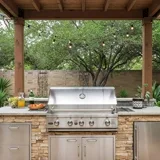
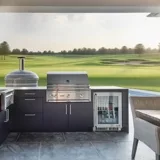
Outdoor Kitchens services in Tampa
Tampa Outdoor Kitchen Construction
A built-in outdoor kitchen is a permanent structure before it is a cooking appliance, and the published numbers only make sense once you know which of the two you are paying for.
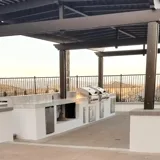
Tampa Outdoor Kitchen Pergola And Patio Cover
A shade structure is the part of an outdoor kitchen that decides how many months of the year the rest of it actually gets used.
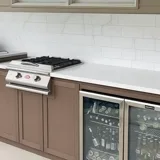
Tampa Outdoor Kitchen Fireplace
An outdoor fireplace is built around one 1,800-degree event, and every part of the specification exists because of it.
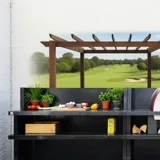
Tampa Outdoor Kitchen Bar Construction
An outdoor bar is two jobs in one structure: a counter run built to bar height, and a small commercial beverage system with water, power and a drain.
Tampa Outdoor Kitchen Lighting
Outdoor lighting is specified in layers, not in fixtures, and any one layer on its own fails at exactly the job it was bought for.
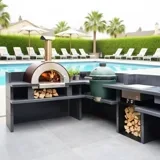
Tampa Outdoor Kitchen Pizza Oven
A pizza oven is a masonry appliance: the heat is the easy part, and the footprint, the mass and the clearance to combustibles are what the build is really about.
Areas we serve
Tampa
Outdoor Kitchens in Tampa, FL - costs, water and soil notes.
Brandon
Outdoor Kitchens in Brandon, FL - costs, water and soil notes.
Riverview
Outdoor Kitchens in Riverview, FL - costs, water and soil notes.
Wesley Chapel
Outdoor Kitchens in Wesley Chapel, FL - costs, water and soil notes.
Lutz
Outdoor Kitchens in Lutz, FL - costs, water and soil notes.
Clearwater
Outdoor Kitchens in Clearwater, FL - costs, water and soil notes.
St. Petersburg
Outdoor Kitchens in St. Petersburg, FL - costs, water and soil notes.